How I became a PhD on Monday
 Marcin Polkowski
Translated from Polish. Originally published on morony.pl on 19 Oct 2016.
On Monday, October 17, I defended my doctoral thesis at the Faculty of Physics of the University of Warsaw. It is titled "Locating earthquake hypocenters by back-propagation using an implementation of the fast marching method in a 3D model of Poland".
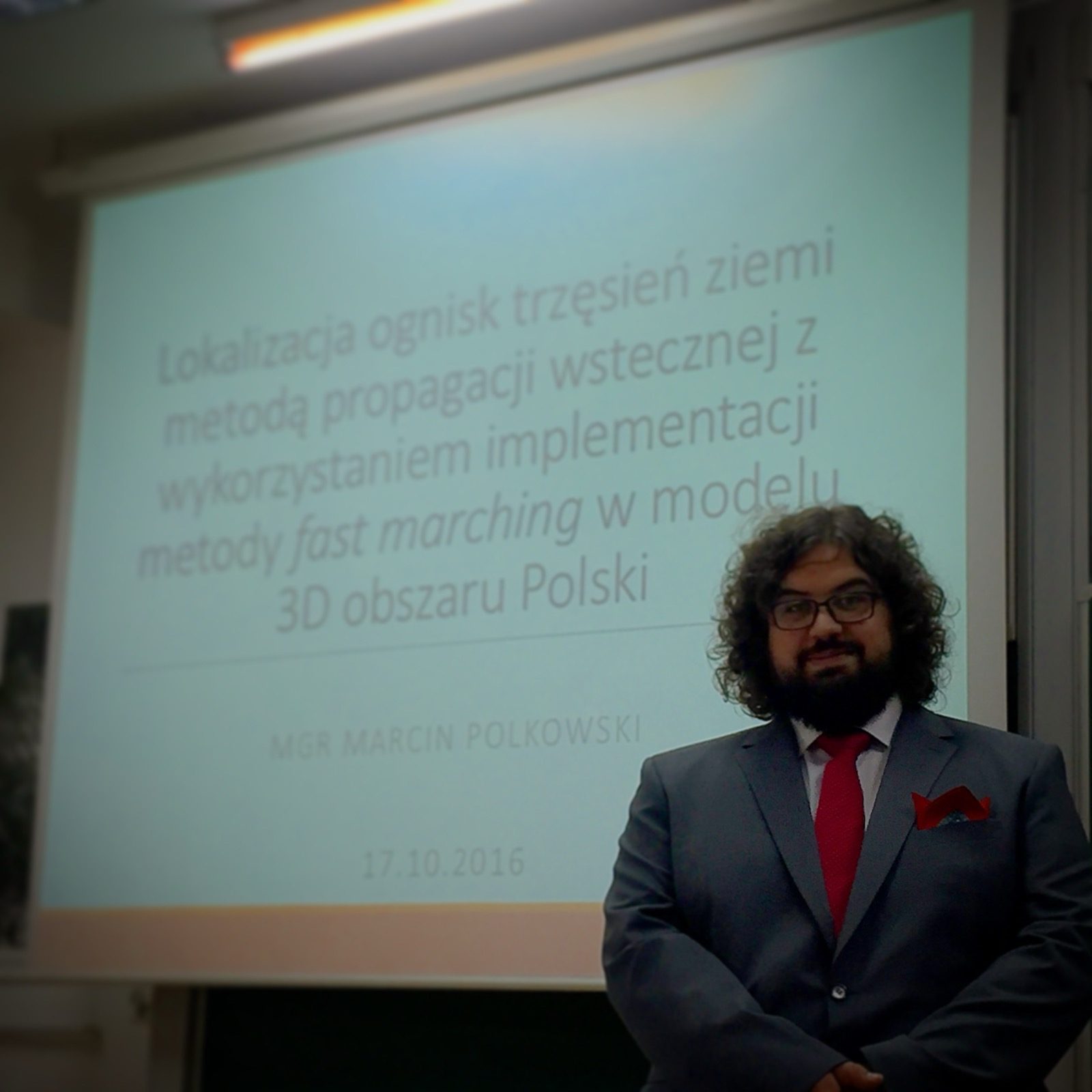
The thesis wrapped up four years of doctoral studies, during which I worked on the whole topic. Of course, the main goal of doctoral studies is to earn a PhD, but it's just as important to use that time to build your "scientific brand". The proof of your results in science is publications in scientific journals (peer-reviewed journals on the so-called Philadelphia list). In 4 years I co-authored 8 such publications.
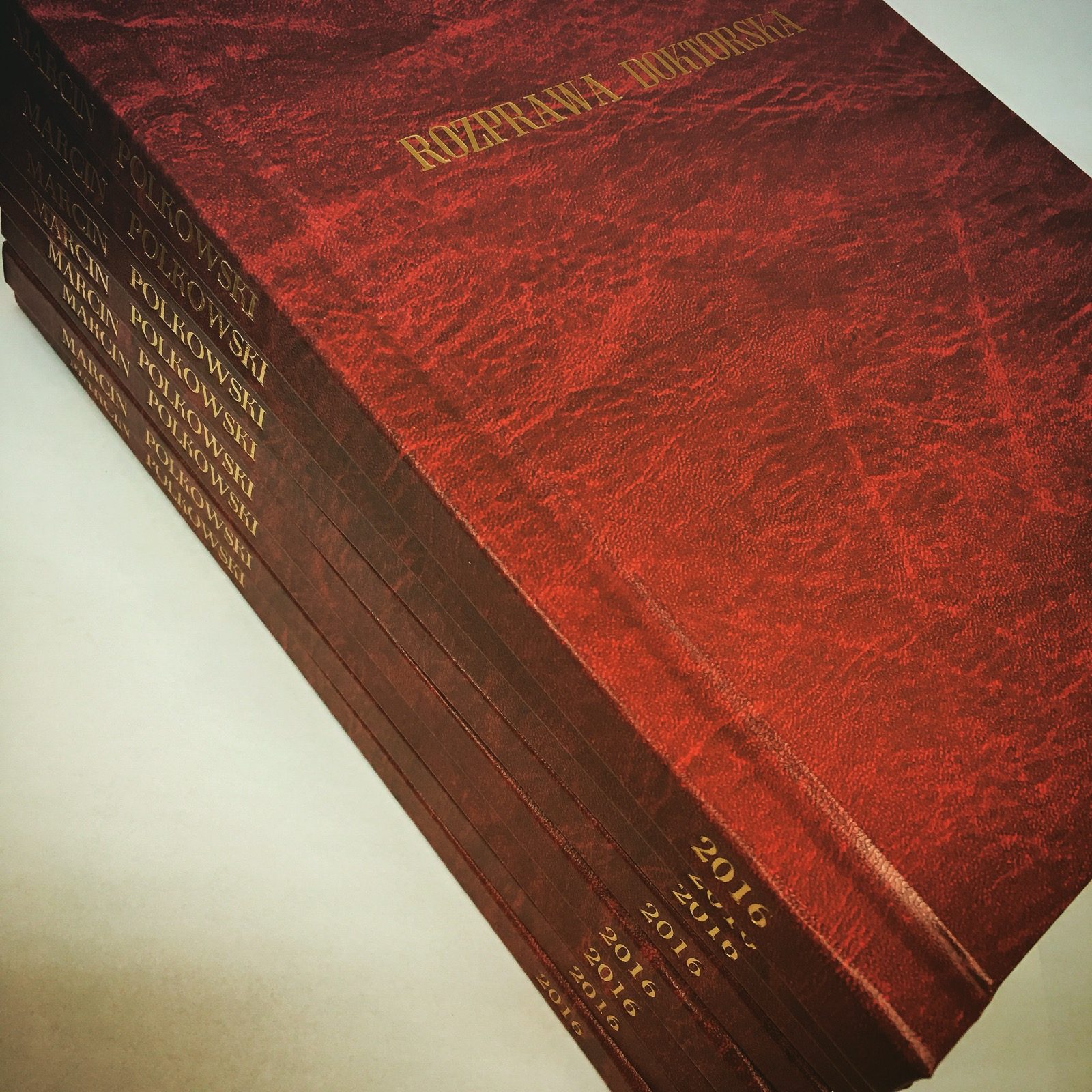
I spent the second half of my fourth year pulling everything I had worked on into a coherent whole – a 180-page doctoral thesis. You can download my thesis from my personal website: http://marcinpolkowski.com/en/ (in the "Education" box on the right).
I should also mention that teaching is an important part of doctoral studies – I mainly taught programming in Python and C++.
Writing the dissertation (wiki) is only the beginning of the road to a PhD. You have to open doctoral proceedings, set up committees for two exams (or three if you don't have an English certificate), appoint two reviewers and set up the committee that will hear the defense. Each of these steps goes through the Faculty Council. The finished thesis first goes to the reviewers, who assess it and admit it to the next stage – they have two months to do so (the reviews of my thesis: review by Prof. Pietsch, review by Prof. Guterch). Once the reviews are in, the defense committee checks all the documents and sets a date for the defense. My defense took place on October 17, 2016.
Mainly as a keepsake, I decided to discreetly record the whole event. I hid a small action camera in a pencil case next to the computer so it wouldn't bother anyone. The whole thing lasted exactly two hours. I think you might be curious what a defense like this looks like (my presentation starts around minute 8–9):
If you have any questions about doctoral studies, the process of getting the degree or my thesis itself, I'll be happy to answer – leave a comment below!
Don't forget to subscribe to my YouTube channel: