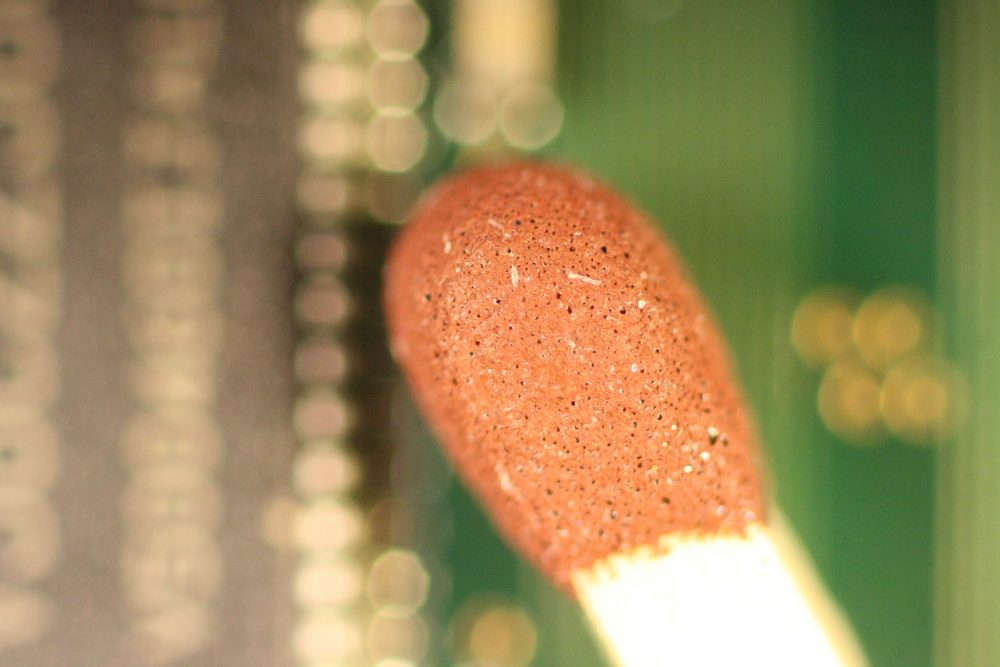
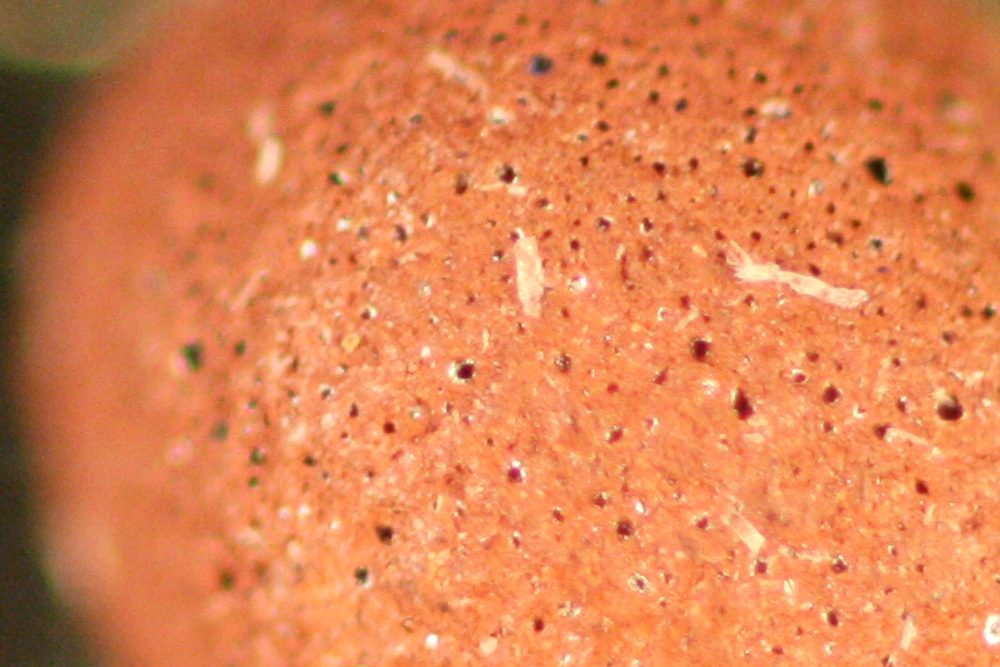
A DSLR that's almost a microscope
 Marcin Polkowski
Translated from Polish. Originally published on morony.pl on 11 May 2010.
Purpose and reason for the experiment
The purpose of the experiment was to see how much magnification you can get with a standard amateur DSLR, a macro lens and macro extension rings.
The reason was plain curiosity. No deeper meaning.
Equipment used
I used a Canon EOS 400D digital SLR with a Canon EF 100mm f/2.8 MACRO lens. I should point out that the lens was designed for full-frame film cameras, so on my DSLR its effective focal length is 160mm.
I also used Kenko macro extension rings. The rings move the lens optics further away from the sensor, which increases the reproduction ratio and forces you to shoot from a shorter distance.
Experimental setup
I mounted the camera on a tripod standing on the floor and pointed the lens straight down at the top of my workbench (the photo is what it is, since it was taken with a phone): 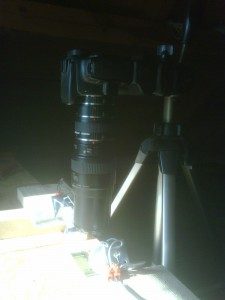 While I was getting ready for the experiment it was cloudy and fairly dark, so I set about building some lighting. I used LED lights:
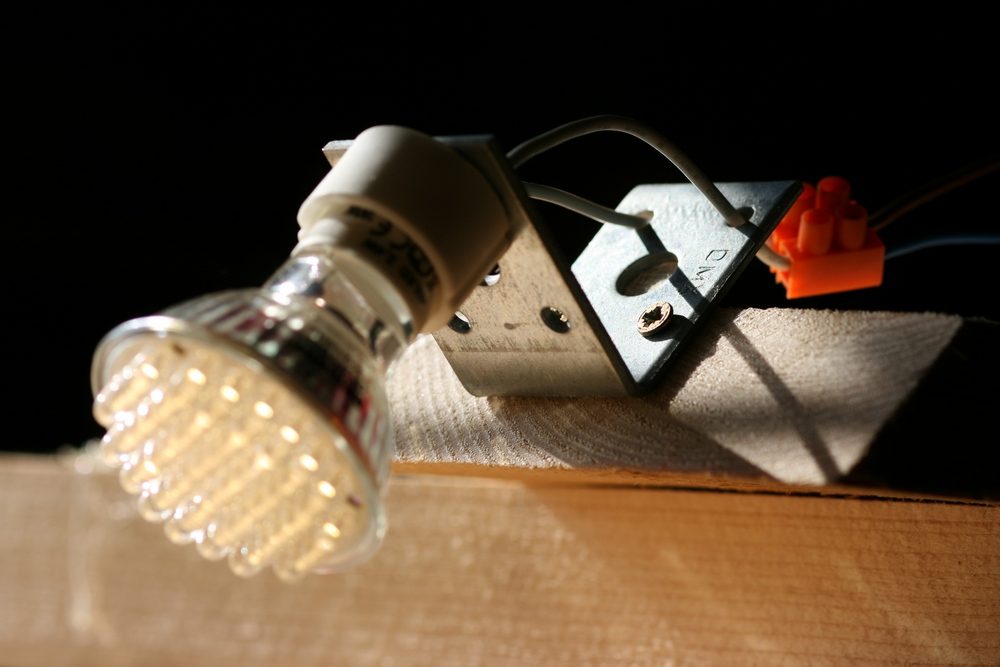
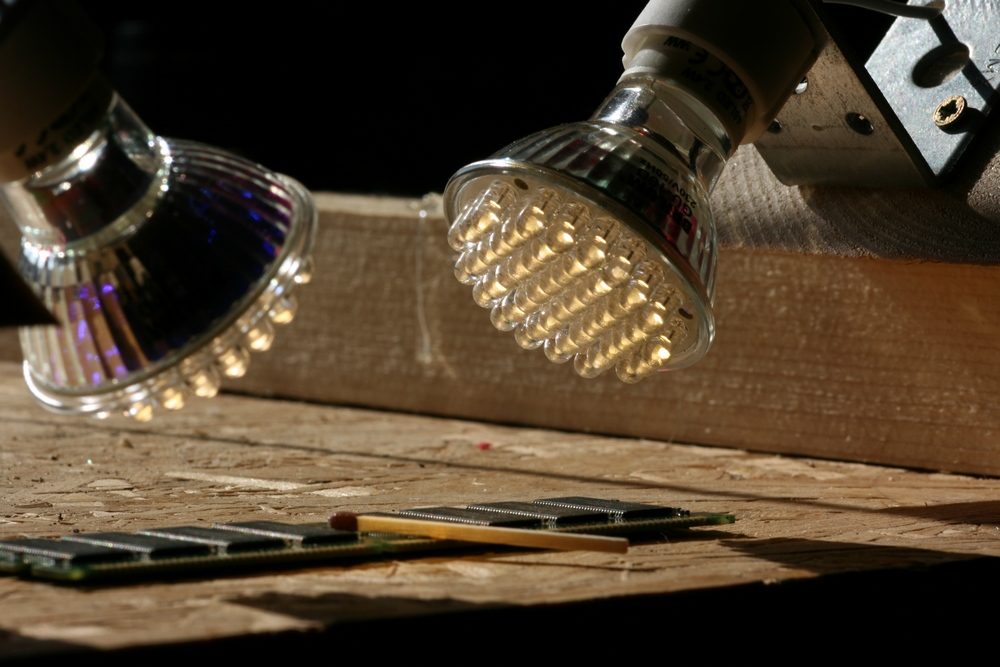
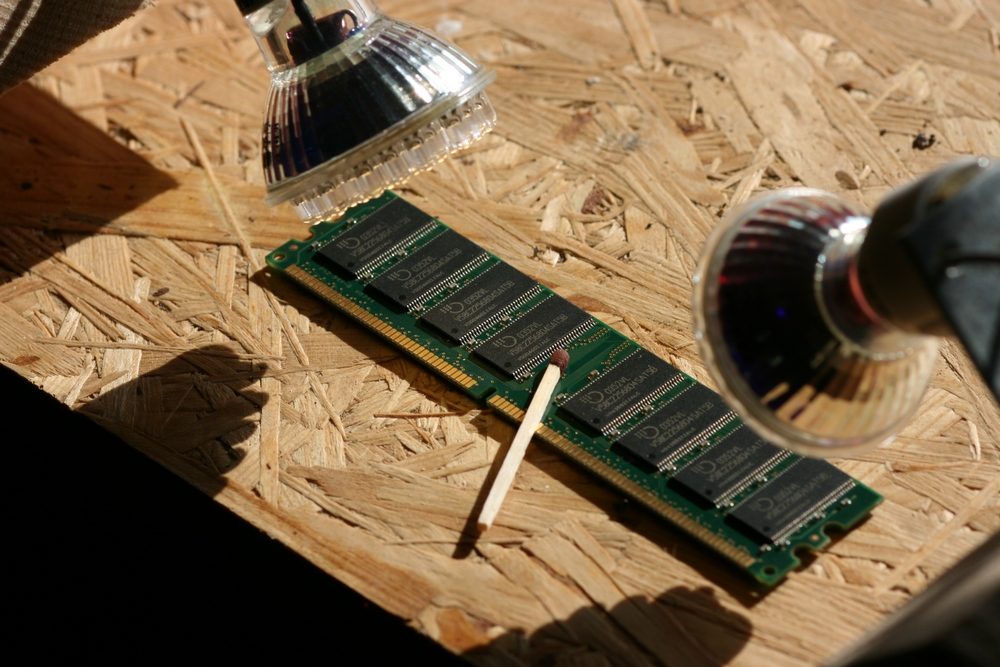
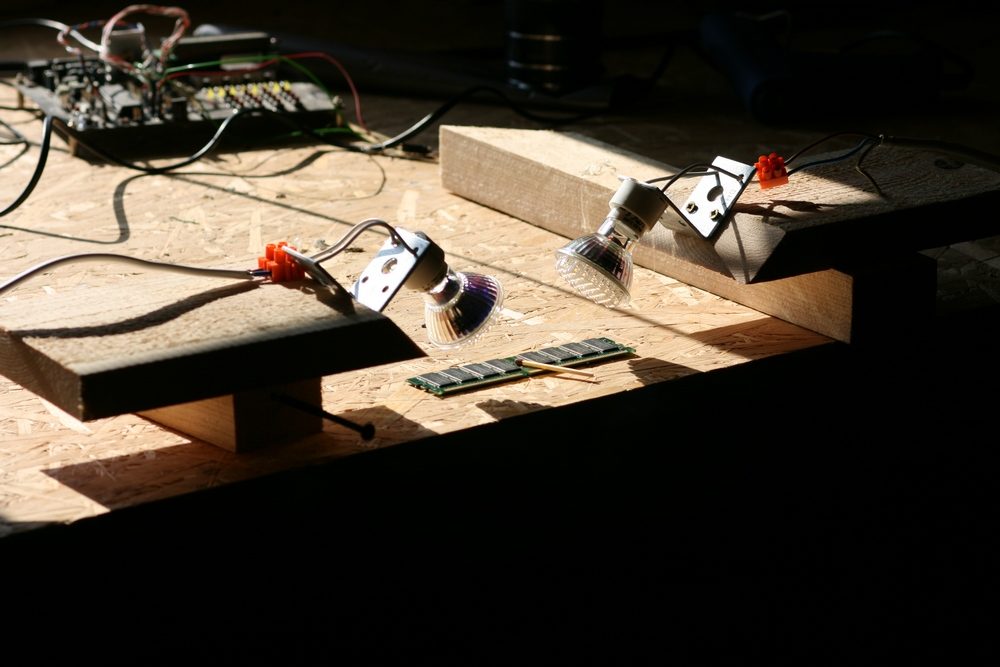
As you can see, I went to a lot of trouble. The subject was a RAM module (512MB). The match is there as the world-renowned standard size reference.
Results
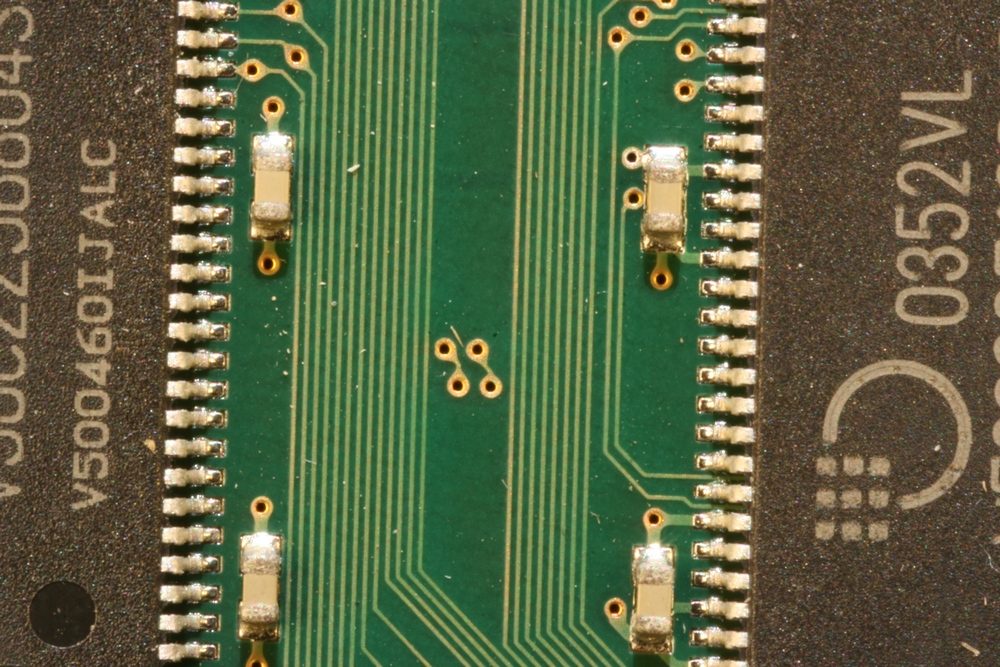
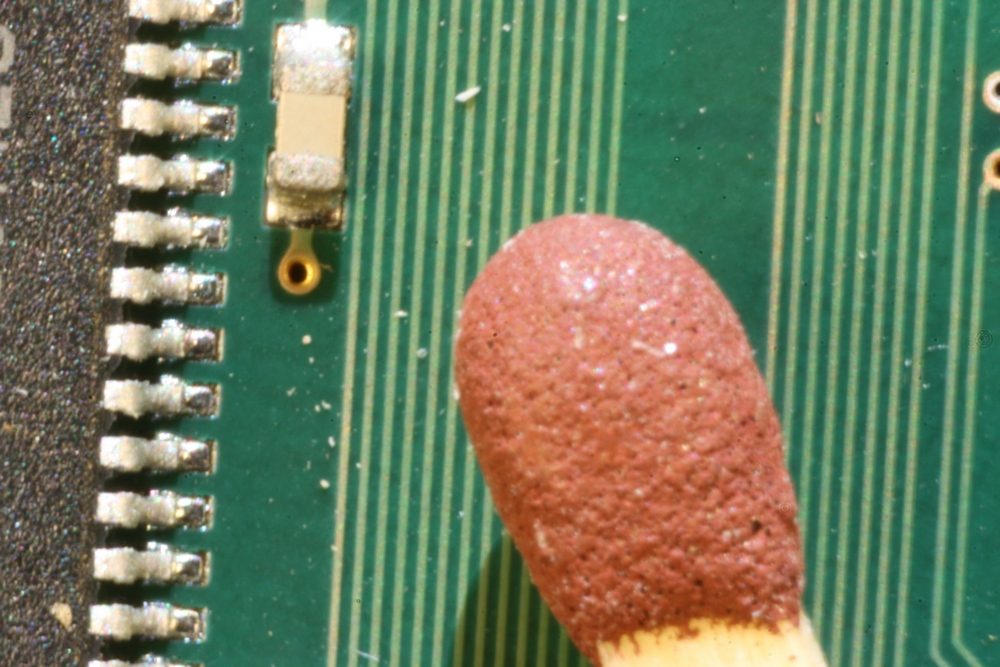
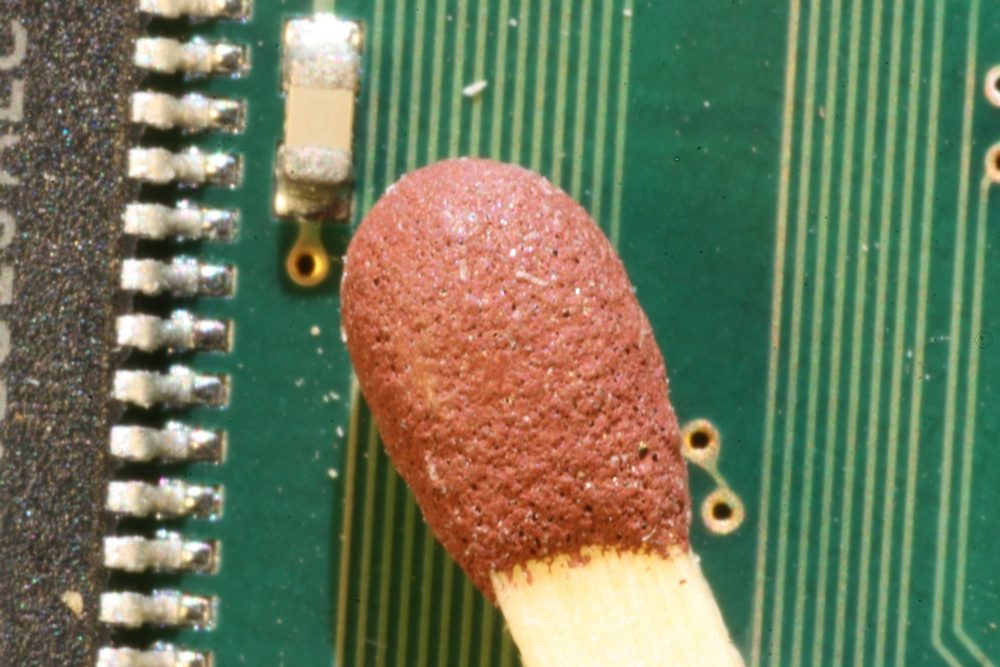
I split the results into two groups. One group contains photos taken without the rings, the other with the rings (12mm + 20mm + 36mm). Important: the photos below have only been scaled down – they weren't cropped from the originals and show the entire frame recorded by the camera.
Photos without rings
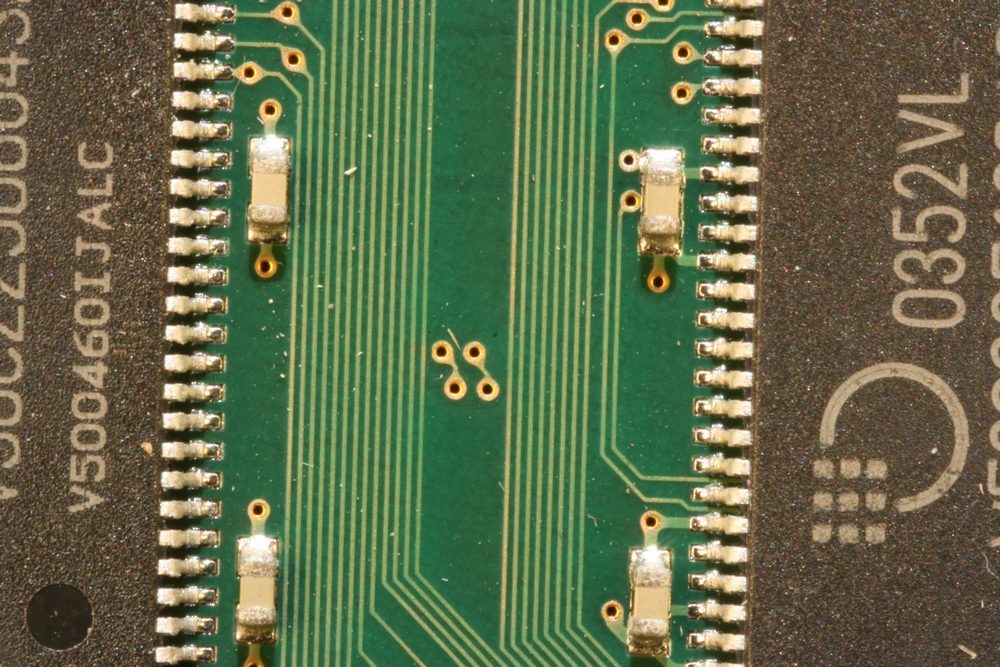
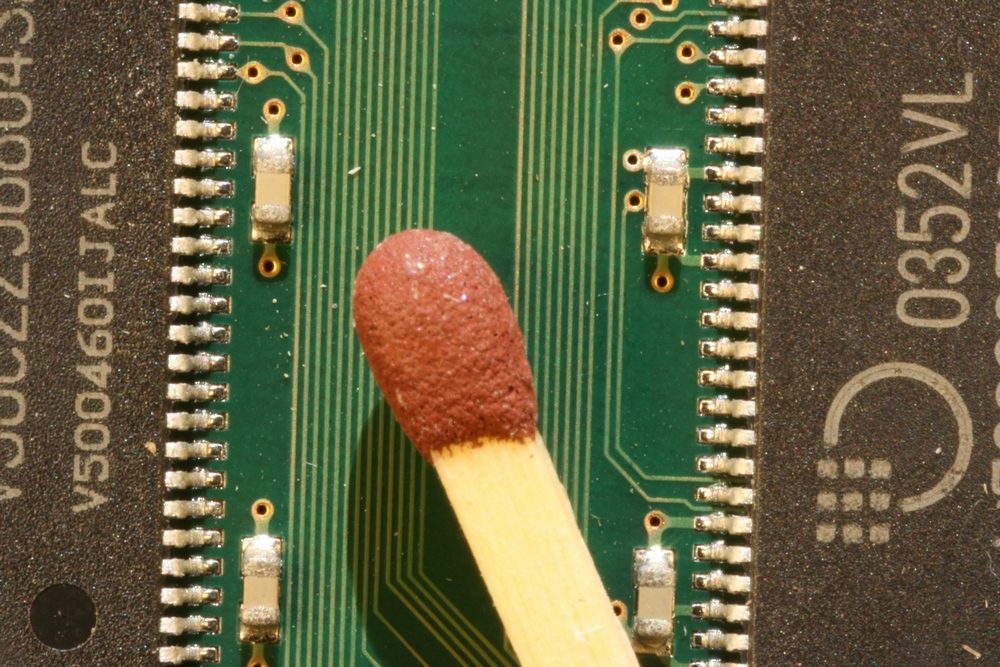
Photos with rings
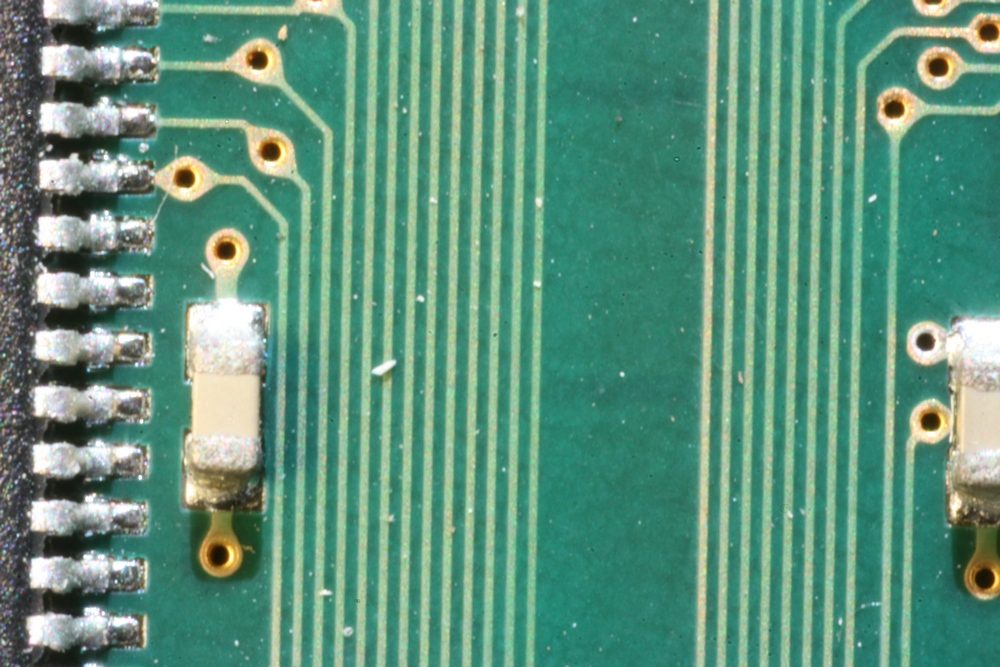
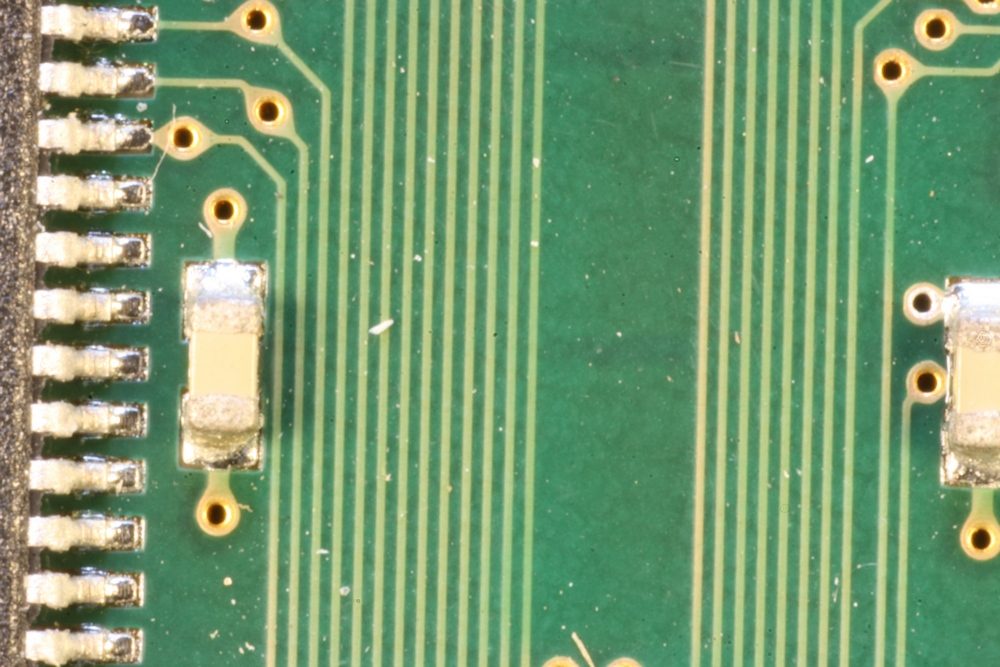
Conclusions
Of course, everyone can draw their own conclusions from the photos above.
It's hard to work out the actual magnification, because in my opinion there's no point in calculating the size of the image on the sensor. I don't have any idea for another "numerical" comparison with a microscope.
I expected a bit more magnification with the rings. Still, their contribution is clearly visible.
Unfortunately, the quality of the photos with the rings is also noticeably worse. You can see it when you zoom in on part of a photo.
I took all the photos at the smallest aperture (f/32) to rule out focus problems. I don't know how much of the "blurriness" visible in the photos comes from poor focusing. I suspect the long exposure time (on the order of seconds) and the questionable stability of the setup also play a part. Remember that magnifying the image also "magnifies" any vibrations. I'll have to try with a remote control.
To sum up
A DSLR isn't going to turn into a microscope.
P.S.
After publishing this post I started thinking about how to get rid of the noise. I tried the photos with rings again. This time I enabled mirror lock-up on the camera (the mirror moving causes vibrations, so the mirror is raised a few seconds before the shutter opens). I also triggered the camera wirelessly from a few meters away. Unfortunately, that didn't help much.
So I tried shortening the exposure time. I set ISO to 1600 and the aperture to 3.5. The exposure time was 1/500 of a second. Below are two pictures: the whole frame scaled down, and a 1:1 crop. Now it's pretty good 🙂